A Human, Practical Guide for Indian Riders**
Let’s pause the spec sheets for a moment.
Think about something familiar.
Imagine you’ve been living in the same home for years. It fits your routine. You know every corner. Now someone asks you a question:
“Would you move into a brand-new apartment… or renovate this home with better wiring, better lighting, and modern upgrades?”
There’s no single right answer.
Some people want a fresh start.
Others want to improve what already works.
This is exactly where many Indian two-wheeler owners find themselves today when they think about going electric.
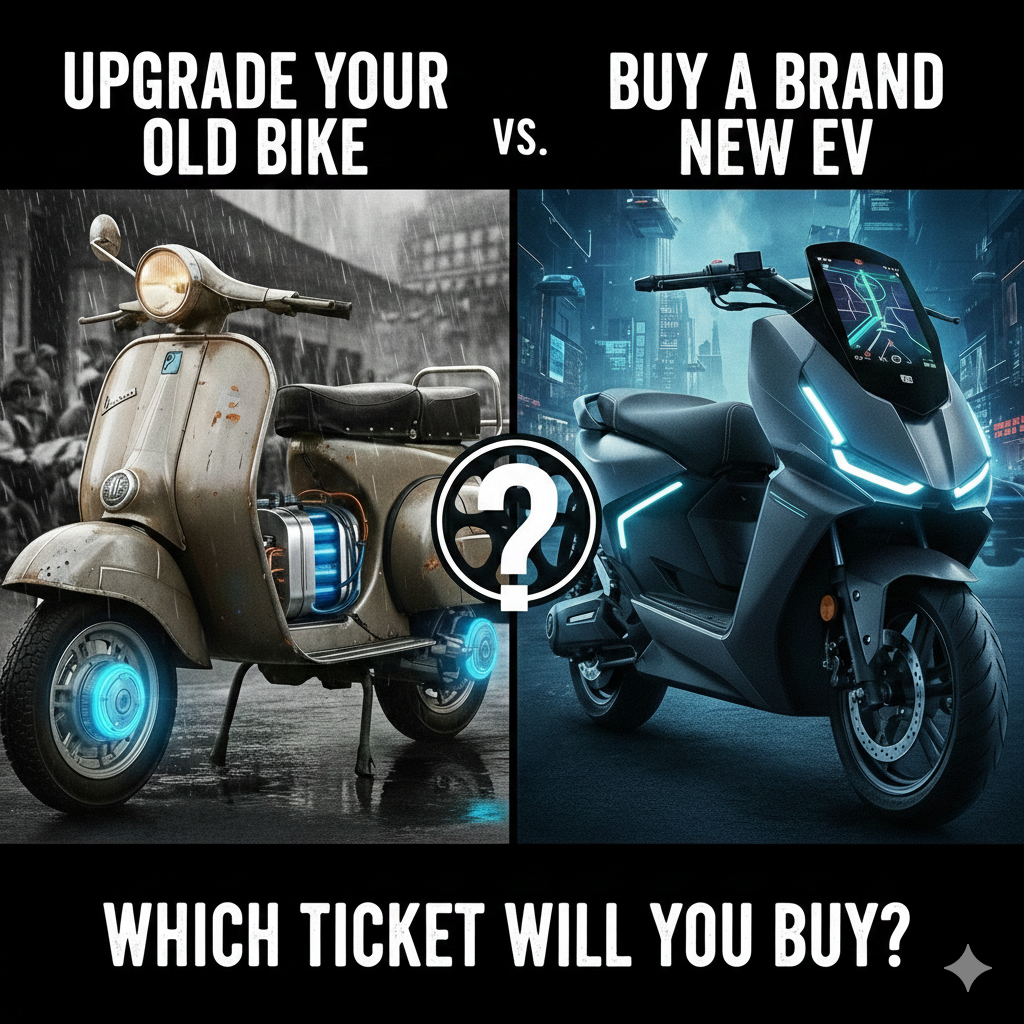
Do you buy a brand-new electric two-wheeler, or do you retrofit the one you already trust?
This decision isn’t technical.
It’s personal.
And it deserves clarity.
Electric Mobility Isn’t a Switch — It’s a Transition
Most people don’t wake up one day and decide to “go electric.”
The thought builds slowly.
Fuel bills rise.
Traffic gets worse.
Service visits feel repetitive.
EV curiosity grows.
And then the real question appears:
“What should my next step be?”
For some, that step is buying a new EV.
For others, it’s converting what they already have.
Both are valid paths into electric mobility.
Buying a New EV: The Comfort of a Fresh Chapter
Buying a new electric two-wheeler feels like starting a new chapter of life.
Everything is designed for today:
the battery is integrated
the motor is optimised
the balance feels intentional
the experience feels modern
There’s peace of mind in knowing the vehicle was built electric from day one.
A New EV Usually Makes Sense If
your current two-wheeler is old or unreliable
you’re buying your first vehicle
you want warranty-backed assurance
you prefer fewer unknowns
you’re comfortable with a higher upfront cost
It’s the clean, predictable option.
But like most fresh starts, it usually asks for more money at the beginning, even though long-term costs are lower.
Retrofitting: Improving What Already Fits Your Life
Now let’s talk about the quieter, often overlooked choice.
Many riders already own a two-wheeler that works perfectly fine. It starts every morning. It fits their routine. It feels familiar.
Retrofitting is for people who think:
“Why replace something that still works… when I can make it better?”
Retrofitting replaces the petrol engine with an electric drivetrain while keeping the existing frame.
It’s not about holding on to the past.
It’s about making a thoughtful upgrade.
Retrofitting Often Makes Sense If
your two-wheeler is in good mechanical condition
you want a lower upfront investment
your daily travel is predictable
you prefer gradual change
sustainability and reuse matter to you
But like renovating a home, the result depends on how well it’s done. Quality kits, approvals, and correct installation matter a lot.
Cost Isn’t About Cheaper — It’s About When You Pay
Many comparisons ask, “Which is cheaper?”
But real life works differently.
A new EV usually costs more upfront, but ownership feels smooth and predictable.
A retrofit usually costs less upfront, but asks for more awareness and involvement.
Over time, both options drastically reduce fuel and maintenance costs compared to petrol.
The difference isn’t the destination.
It’s the journey and timing.
(If you want to see the numbers clearly, our detailed EV vs Petrol Two-Wheeler: 5-Year Cost Comparison breaks this down step by step.)
The Emotional Side People Rarely Talk About
This decision isn’t just financial.
Some riders feel attached to their current vehicle. It has memories, routines, familiarity. Retrofitting feels respectful to that journey.
Others want a clear break — a new look, a new experience, a new identity.
Neither feeling is wrong.
Electric mobility isn’t just about technology.
It’s about comfort with change.
Why “New EV vs Retrofit” Is the Wrong Debate
Online discussions often turn this into a fight.
New EV vs Retrofit.
Right vs Wrong.
That framing creates confusion.
The real question is:
“Which option fits my life right now?”
Because context matters:
budget comfort
daily distance
charging access
vehicle condition
emotional readiness
When context is ignored, people feel stuck.
When context is respected, decisions feel lighter.
(This is also why many people feel overwhelmed while choosing EVs — something we explore further in Why EV Buying Feels Confusing in India.)
India Needs Both Paths to Succeed
From a bigger picture view, India doesn’t need one winner.
New EVs push innovation, design, and future technology
Retrofits make adoption more inclusive and affordable
One moves the industry forward.
The other brings more people along.
Together, they make the transition realistic.
So… What Should You Do?
If your current two-wheeler feels like it has completed its journey, and you want a smooth, future-ready experience — a new EV may feel freeing.
If your vehicle still fits your life and you want a practical, cost-aware transition — retrofitting may feel reassuring.
There’s no rush.
There’s no pressure.
The goal isn’t to go electric quickly.
It’s to go electric comfortably.
A Founder’s Final Thought
Good decisions don’t shout.
They settle.
At EcoRidesBazaar, we believe EV choices shouldn’t feel like debates or guesses. They should feel guided — based on real life, not just specs.
Because whether you choose a fresh start or a thoughtful upgrade,
the right electric journey is the one that fits you.
SEO FAQs (For Search & Voice Queries)
Is it better to buy a new EV or retrofit an old two-wheeler?
It depends on your context. New EVs suit those who want predictability and warranty, while retrofitting works well if the existing vehicle is in good condition and budget matters.
Is retrofitting a two-wheeler legal in India?
Yes, retrofitting is legal when done using approved kits and following government regulations.
Which option is cheaper overall?
Retrofits usually have lower upfront costs, while new EVs may offer smoother long-term ownership.
Does retrofitting reduce running costs like a new EV?
Yes. Both significantly reduce fuel and maintenance costs compared to petrol vehicles.
Who should avoid retrofitting?
Riders with very old vehicles or those who want minimal uncertainty may prefer a new EV.