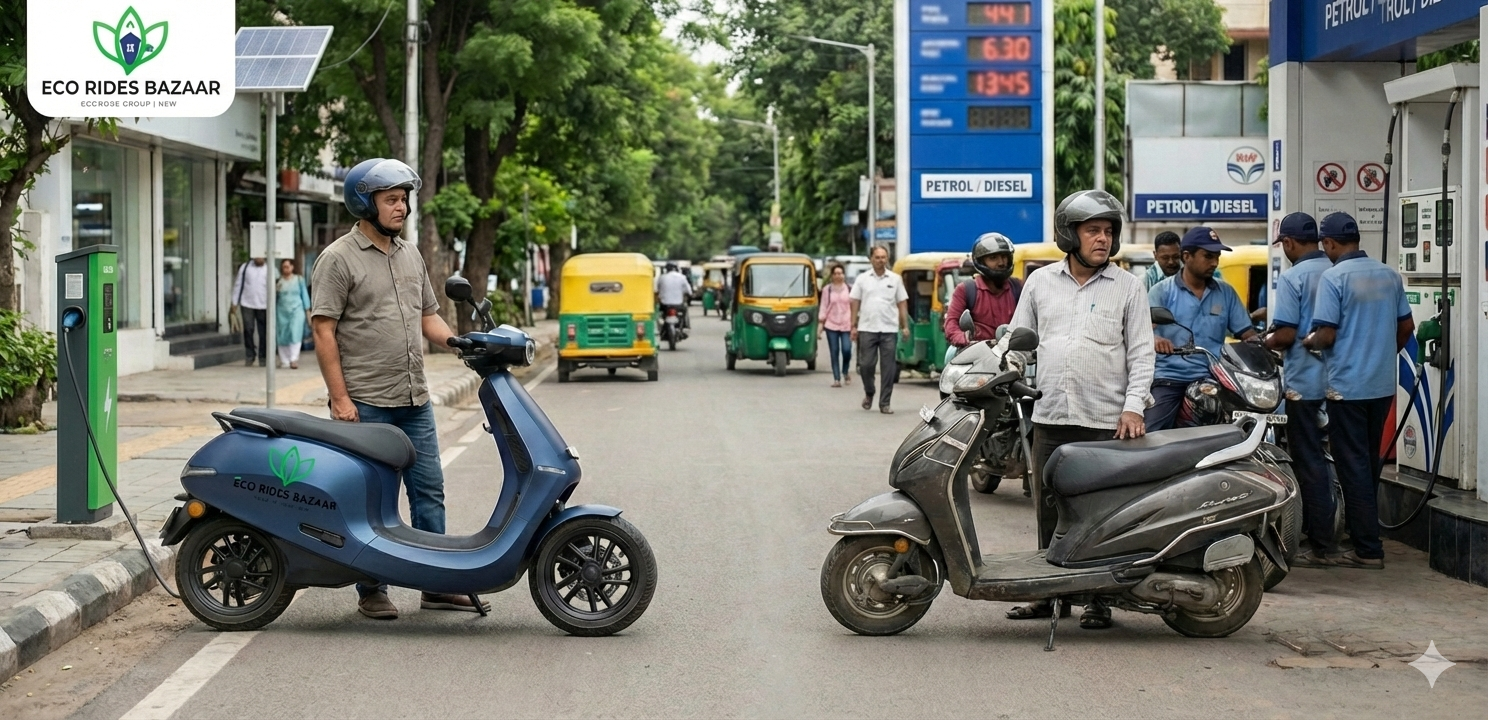
Choosing between an electric two-wheeler and a petrol one is no longer just about technology. For most Indian riders, it’s a practical, financial, and lifestyle decision.
At first glance, petrol two-wheelers feel familiar and affordable. Electric two-wheelers promise lower running costs and cleaner mobility. But the real answer to “Which is cheaper?” only becomes clear when you look beyond the showroom price and evaluate total cost of ownership over time.
This pillar guide breaks down the real 5-year cost difference between EV and petrol two-wheelers in India, using clear numbers, real-world usage, and simple explanations.
Why a 5-Year Cost Comparison Matters
Two-wheelers are long-term companions. Most owners keep them for at least 4–6 years, using them almost daily. Comparing only the upfront price ignores the costs that quietly accumulate over time—fuel, maintenance, servicing, and insurance.
A 5-year view reveals:
How running costs add up
Where EVs actually save money
When petrol still makes sense
Which option fits different riding patterns
Upfront Purchase Cost: Where the Comparison Starts
In India, a typical petrol two-wheeler costs around ₹60,000 to ₹80,000 on-road. This lower entry price makes petrol vehicles feel like the safer choice initially.
Electric two-wheelers usually start around ₹75,000 and can go up to ₹1.3 lakh, depending on battery size, range, and features. The higher price is largely driven by battery costs.
However, upfront price is only one part of the equation—and often not the most important one.
Fuel vs Charging Cost: The Biggest Long-Term Difference
Fuel is where petrol two-wheelers slowly become expensive.
A petrol two-wheeler typically delivers 45–55 km per litre. With petrol prices averaging ₹95–₹105 per litre, a rider covering about 35 km per day spends roughly ₹2,500–₹3,000 per month on fuel.
Over 5 years, fuel costs alone add up to ₹1.5–₹1.8 lakh.
Electric two-wheelers tell a very different story. Most consume about 3–5 units of electricity per 100 km. With residential electricity tariffs around ₹7–₹9 per unit, monthly charging costs for the same usage usually stay between ₹300–₹450.
Over 5 years, total charging cost comes to just ₹18,000–₹27,000.
That’s a difference of over ₹1.2 lakh, purely on energy cost.
Maintenance Cost: Simplicity vs Complexity
Petrol two-wheelers rely on engines with many moving parts. Over five years, owners typically pay for:
Engine oil changes
Filters and spark plugs
Clutch and gearbox wear
Periodic tuning
These costs usually total ₹10,000–₹15,000 over five years.
Electric two-wheelers are mechanically simpler. There’s no engine oil, exhaust system, or fuel injection. Most maintenance involves tyres, brakes, and basic inspections.
As a result, EV maintenance costs over five years typically fall between ₹3,000–₹7,000.
Insurance, Road Tax & Ownership Charges
Insurance costs for petrol two-wheelers over five years usually range from ₹10,000 to ₹15,000. Electric two-wheelers can cost slightly more to insure—around ₹12,000 to ₹18,000—mainly due to battery coverage.
However, many Indian states offer reduced or zero road tax for EVs, which helps offset insurance differences. Additionally, most electric two-wheelers come with 3–5 years of battery warranty, reducing ownership risk.
Resale Value After 5 Years
Petrol two-wheelers benefit from a mature resale market. After five years, they typically retain 30–40% of their original value, translating to ₹20,000–₹28,000 for a ₹70,000 vehicle.
EV resale is still evolving but improving quickly. Today, electric two-wheelers retain around 25–35% of their value, depending on battery health and remaining warranty.
As EV adoption grows, resale confidence is expected to strengthen further.
Total 5-Year Cost: What It Really Adds Up To
When all costs are considered together:
A petrol two-wheeler purchased for about ₹70,000 typically costs close to ₹2.3 lakh over five years, including fuel, maintenance, insurance, and after resale.
An electric two-wheeler purchased for around ₹90,000 usually costs about ₹1.05–₹1.2 lakh over the same period.
That’s a saving of ₹1 lakh or more in favour of electric two-wheelers under typical urban usage.
Which One Makes Sense for You?
An electric two-wheeler makes strong financial sense if:
Your daily travel is predictable
You ride mostly in the city
You can charge at home or nearby
You want lower monthly expenses
A petrol two-wheeler may still suit you if:
You travel long distances irregularly
Charging access is limited
You prioritise familiarity and widespread service support
The Bigger Picture: Cost Is Only Part of the Decision
Beyond money, EV owners often appreciate:
Quiet, smooth rides
Home charging convenience
Fewer service visits
Petrol owners value:
Quick refuelling
Established service networks
Familiar ownership experience
The right choice depends on context, not just comparison charts.
Final Verdict
Over a 5-year ownership period, electric two-wheelers are significantly cheaper to own for many Indian riders, especially in urban settings. Petrol two-wheelers still have their place, but financially, EVs are steadily becoming the smarter long-term option.
At Eco Rides Bazaar, we believe EV decisions should be made with clarity, real numbers, and real-life context—not confusion or hype.